
Checking Criminal History in Fayette County
Begin with the question the record must answer. A Fayette County court result is searched through Judici and confirmed with the Circuit Clerk. Present custody is checked through VINELink because the county does not publish its own booking roster. A sheriff or police narrative must come from the agency that created it. Illinois State Police, not the county, supplies the public statewide conviction inquiry and the subject-only fingerprint transcript.
Collect the full name, likely spelling variants, approximate event date, birth date when lawfully available, arresting agency, and any case or report number. Then follow the matching event instead of assuming that two people with a similar name are the same person.
- Search Fayette County on Judici for a filed criminal case and note the case number.
- Read every count and event entry, including amendments, dismissals, and the final disposition.
- Check VINELink separately if the question concerns current county custody.
- Request the incident or arrest report from the sheriff, Vandalia Police, St. Elmo Police, or the agency named in the file.
- Ask Room 112 for a certified copy, or use ISP Access and Review when checking your own state transcript.
Fayette County's Seventh Street Records Hub
Much of the local trail converges at 221 S. 7th St. in Vandalia. The Circuit Clerk is in Room 112, the State's Attorney in Room 201, the Public Defender in Room 213, and the Probation Office and sheriff-jail functions share the same county complex. That makes an in-person records day more direct than in counties where agencies sit miles apart, but each counter still holds a different part of the event.
The official Fayette County contact page shows the courthouse location.
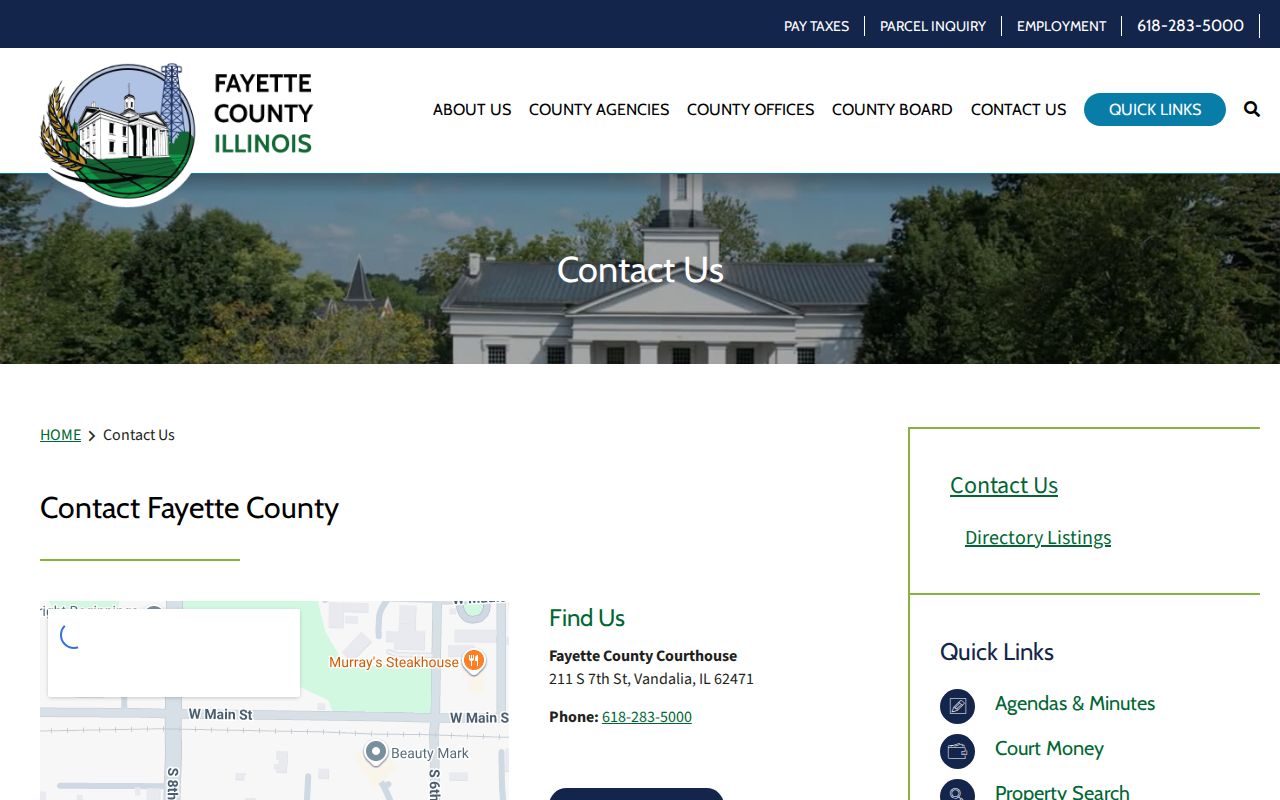
The courthouse contact view is useful for planning a clerk, prosecutor, probation, or sheriff inquiry without confusing one office's role with another's.
Circuit Clerk
Room 112
618-283-5009
Filed cases, docket entries, and official copies
Sheriff and Jail
221 S. 7th St.
618-283-2141
Sheriff reports, booking records, and jail questions
Probation Office
221 S. 7th St.
618-283-5015
Weekdays, 8 a.m. to 4 p.m.
Visitors use the courthouse entrance, while law enforcement uses the south jail door. County rules prohibit firearms and replicas and identify clothing restrictions. Call the destination office before traveling if access, copy, or case status is time-sensitive.
Illinois Official Background Checks
The Illinois State Police Bureau of Identification is the central repository. Its Criminal History Information Response Process, or CHIRP, provides a public name-based inquiry under the Uniform Conviction Information Act. The electronic inquiry costs $10 and returns public conviction information. A manual paper name request costs $16. Neither is a substitute for the Fayette Circuit Court file, which may show pending charges, dismissals, supervision, and details beyond a conviction result.
The CHIRP portal is the state entry point for the electronic conviction inquiry.
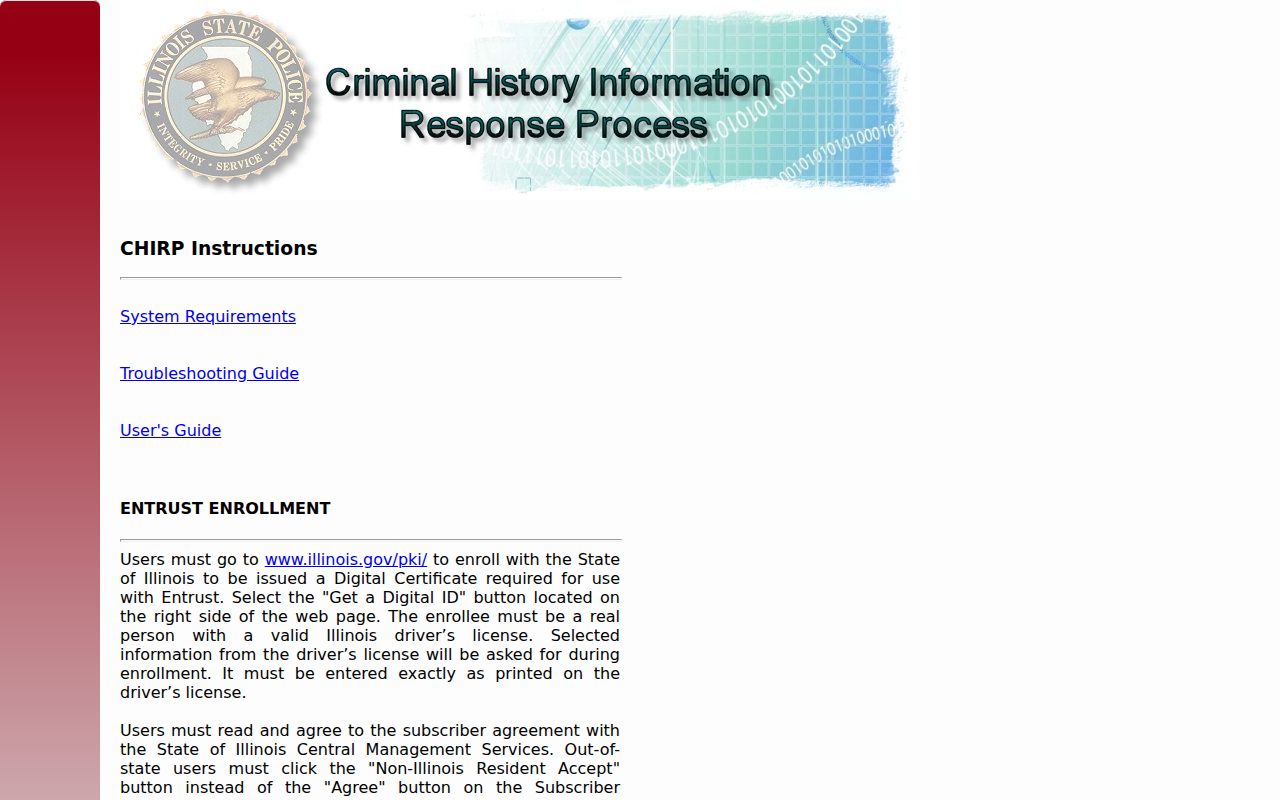
Keep the transaction control number because ISP uses it to retrieve the response. The basic workflow requires account credentials, subject name and prompted identifiers, electronic payment, and the TCN for response retrieval.
| Electronic UCIA name inquiry | $10 |
|---|---|
| Manual paper name inquiry | $16 |
| Electronic fingerprint-card request | $15 |
| Paper fingerprint-card request | $20 |
| State plus FBI electronic request | $27, excluding a possible vendor capture fee |
Reviewing Your Own Fayette County Transcript
ISP Access and Review is the no-charge path for seeing your own broader Illinois transcript. Present yourself at an Illinois law-enforcement or correctional facility or a licensed Live Scan vendor during its regular hours, provide fingerprints and identifying information, and have the submission sent to the Bureau of Identification. ISP mails either the transcript with a Record Challenge form or a no-record statement to the selected address.
The official ISP Access and Review instructions explain the subject-only process.
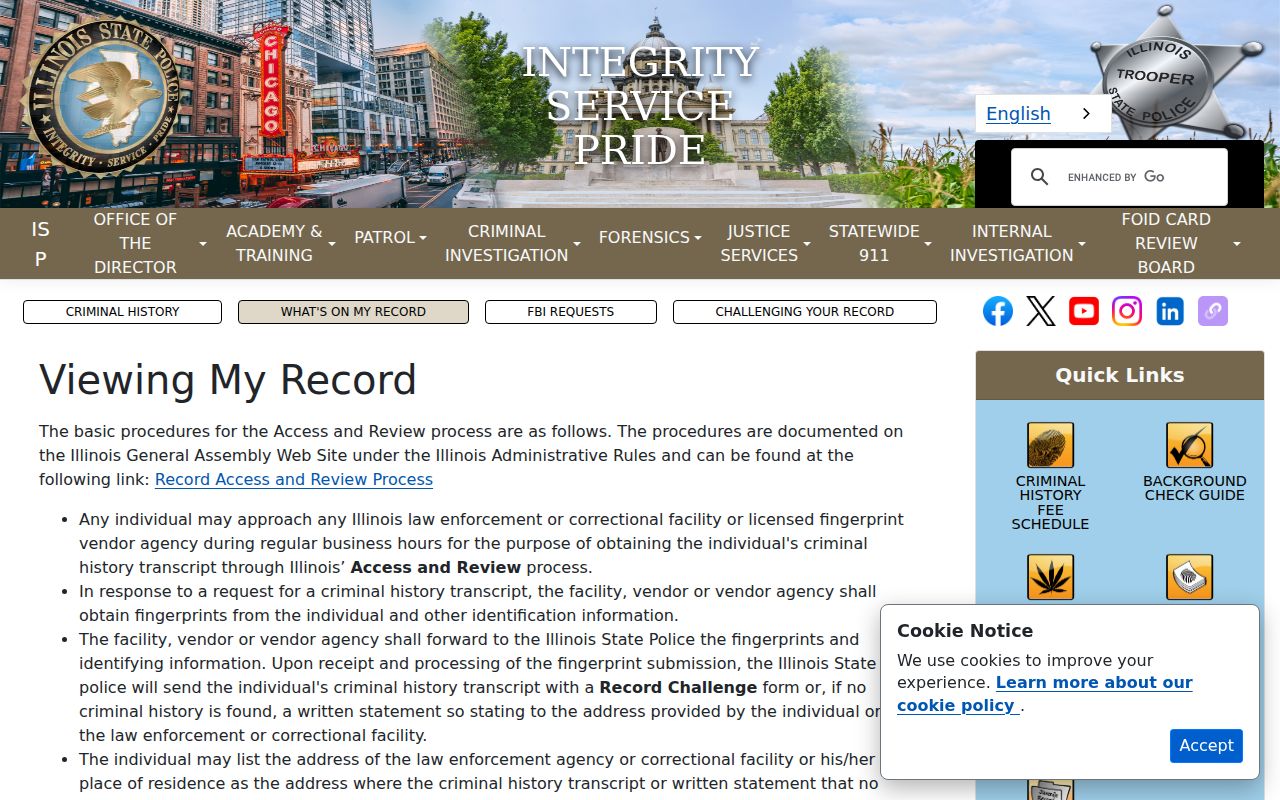
This view is broader than public CHIRP conviction information and can expose a missing or mismatched disposition that needs correction. If the response returns to a facility and remains unclaimed 45 days after notice, the facility destroys it.
No official Live Scan storefront was verified inside Fayette County in the reviewed vendor list. Check the current Illinois licensed fingerprint vendor directory or call the sheriff before traveling.
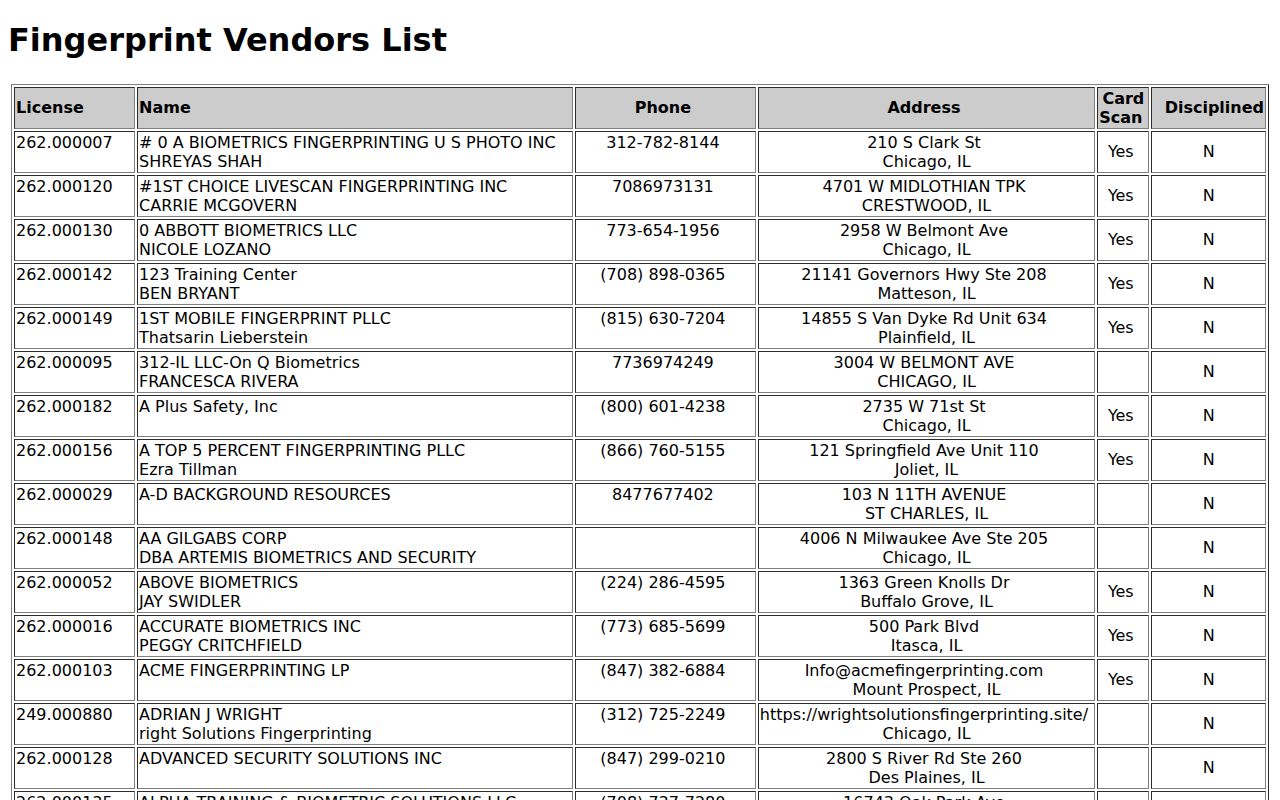
A vendor can charge a capture fee even when ISP charges nothing for Access and Review, so confirm appointment rules and total cost first.
Fayette County Criminal Record Types
One arrest can create several records, and each answers a different question. The arresting agency's report describes the investigated event and asserted grounds. Fayette County Jail records identity, property, charges presented at intake, custody, and release. The State's Attorney chooses what to file, and the Circuit Clerk preserves the resulting case. ISP then links qualifying fingerprint-supported arrest cycles with reported dispositions.
- Incident or arrest report: the sheriff, municipal police, ISP, or another arresting agency holds its narrative.
- Booking and custody record: Fayette County Jail creates the intake and release record.
- Circuit Court file: Room 112 holds pleadings, docket events, orders, outcomes, sentences, and costs.
- State criminal-history entry: ISP maintains fingerprint-linked events, with public UCIA access limited to convictions.
- Registry or supervision record: ISP, IDOC, and Fayette Probation hold distinct public and restricted data.
An arrest is not a conviction. A charge can change before filing, be amended later, end in dismissal or acquittal, or produce a judgment on only some counts. Always read the final entry for each count.
Judici Versus Fayette County Room 112
Judici is the efficient first stop for basic public case information. A result may show county, case number, filing date, case type, status, parties, count descriptions, statutes, event text, hearing dates, dispositions, financial entries, and balance. Document images are not guaranteed. Juvenile, impounded, sealed, and expunged matters are outside ordinary public access, and protected identifiers are omitted.
| Channel | Best use | Limit |
|---|---|---|
| Judici | Find a public Fayette case and follow docket events | A summary is not the complete official file |
| Circuit Clerk, Room 112 | Inspect the file and order plain or certified copies | Access restrictions and copy charges apply |
| CHIRP | Run an Illinois public conviction inquiry | Does not reproduce a Fayette court file |
| ISP Access and Review | Review and challenge your own fingerprint transcript | Subject-only fingerprint process |
The clerk charges $1 for the first page, 50 cents for each of the next 19 pages, and 25 cents for each later page. Emailed information costs slightly more when deputy-clerk research is involved, although the county does not publish that amount. Confirm the likely total with the clerk before requesting a long file or an official copy.
Inside a Fayette County Criminal Record
An Illinois criminal-history transcript begins with reported identity information, aliases, birth date, physical descriptors, State Identification and FBI numbers where assigned, and fingerprint transaction identifiers. Events are grouped into arrest cycles. A cycle may include arrest date, agency, alleged statutes and offense classes, court tracking, disposition, sentence, and later custody or supervision.
| Name and identifiers | Reported name, aliases, date of birth, descriptors, and assigned state or federal numbers |
|---|---|
| Arrest and booking | Agency, date, fingerprint transaction, booking, custody, and release details where held |
| Charges | Alleged offense, statute, class, count, and later amendments |
| Disposition | Conviction, dismissal, acquittal, supervision, or another recorded result |
| Sentence | Confinement, probation, fines, costs, restitution, and related orders where public |
| Custody or supervision | County jail, IDOC, parole, or probation information held by the responsible agency |
A blank disposition does not prove that a case is still pending. It can reflect a reporting or linkage gap. Compare the entry with the certified Fayette court disposition and use ISP's Record Challenge process when your own transcript is wrong.
No Fayette County Booking Page: Use VINELink
Fayette County does not host a public daily roster, booking log, mugshot gallery, or sheriff mobile-app arrest feed. The county's jail instructions direct the public to VINELink to ask whether a person is in custody. Select Illinois, search by name or an available identification number, inspect the supplied custody record, and optionally register for notifications. A local result commonly supplies name, custody status, facility or agency, and whatever identifying or case data the source makes available.
The Fayette County Sheriff page identifies the jail and county law-enforcement contact.
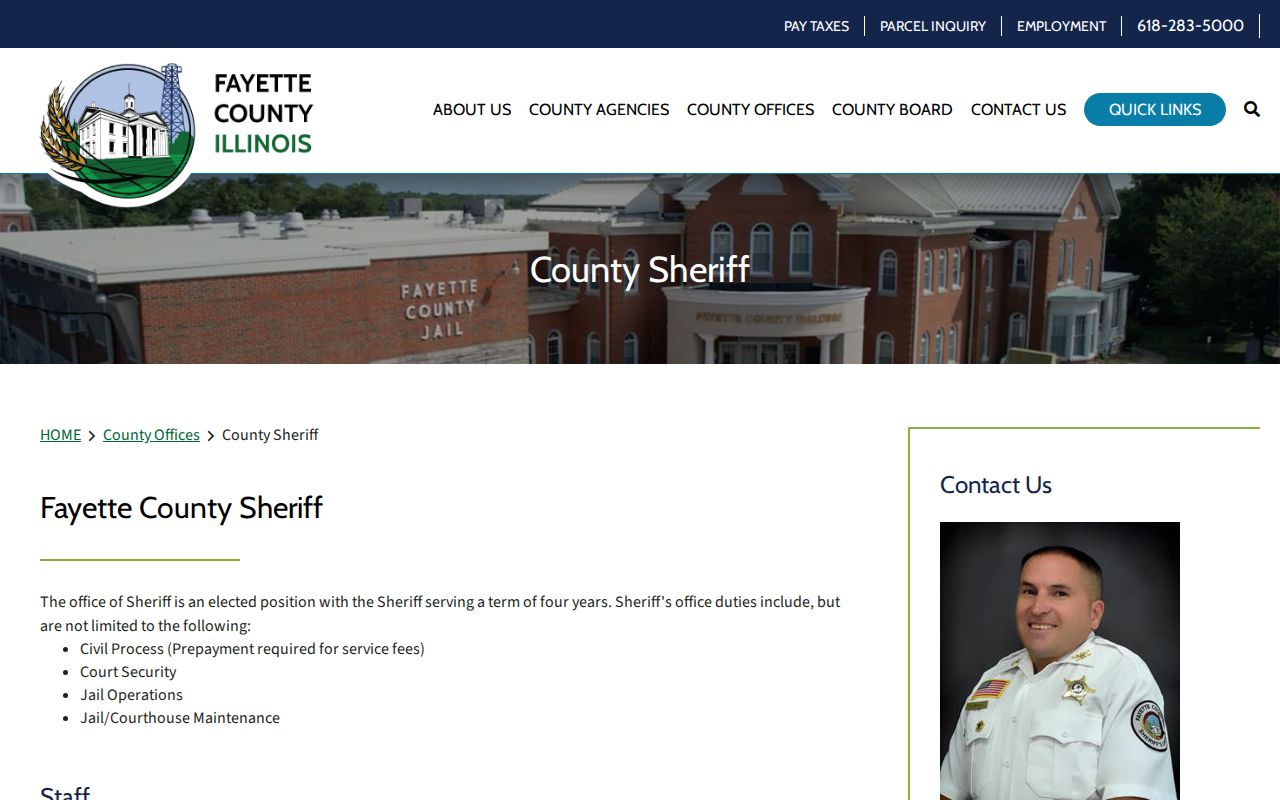
Do not expect a mugshot, housing assignment, medical flag, judge, or count-by-count release detail unless the official result actually supplies it. If a sentenced person has transferred to state prison, use the IDOC Individuals in Custody Search instead. Federal imprisonment is separate again and uses the Bureau of Prisons locator.
Warrant rule: Fayette County will not provide outstanding-warrant information by phone. The jail instructions require an in-person inquiry at the jail lobby. Judici can offer a clue about a court entry, but it is not definitive real-time warrant clearance.
Public Access Laws in Illinois
Illinois law separates open local records, state conviction dissemination, criminal-history reporting, and court restrictions. Ask the office that created the document, describe the record precisely, and request segregable nonexempt portions when protected details must be withheld. FOIA does not override a confidentiality statute or a sealing order.
Key statutes:
5 ILCS 140 establishes Illinois FOIA procedures and exemptions for public-body records.
20 ILCS 2635 governs public dissemination of ISP conviction information and related request fees.
20 ILCS 2630 governs criminal-history reporting and the principal adult expungement and sealing process.
730 ILCS 152 governs Illinois sex-offender community notification and the public internet database.
Protected Social Security and account numbers, victim and minor information, sensitive addresses, active investigative details, and security or medical information may be redacted. A court also can restrict an entire case when the law permits.
Reading Fayette County Probation Terms
A court docket may identify probation, supervision, Drug Court, electronic monitoring, Administrative Sanctions, or a petition to revoke without explaining the program. Fayette Probation supervises adults and juveniles placed on local supervision and accepts qualifying transfers. Its published programs include nonprofit public-service work, Men Challenging Violence, Moral Reconation Therapy, an online DUI Victim Impact Panel, GPS monitoring, testing, and Drug Court.
The official Fayette County Probation page describes these local services.
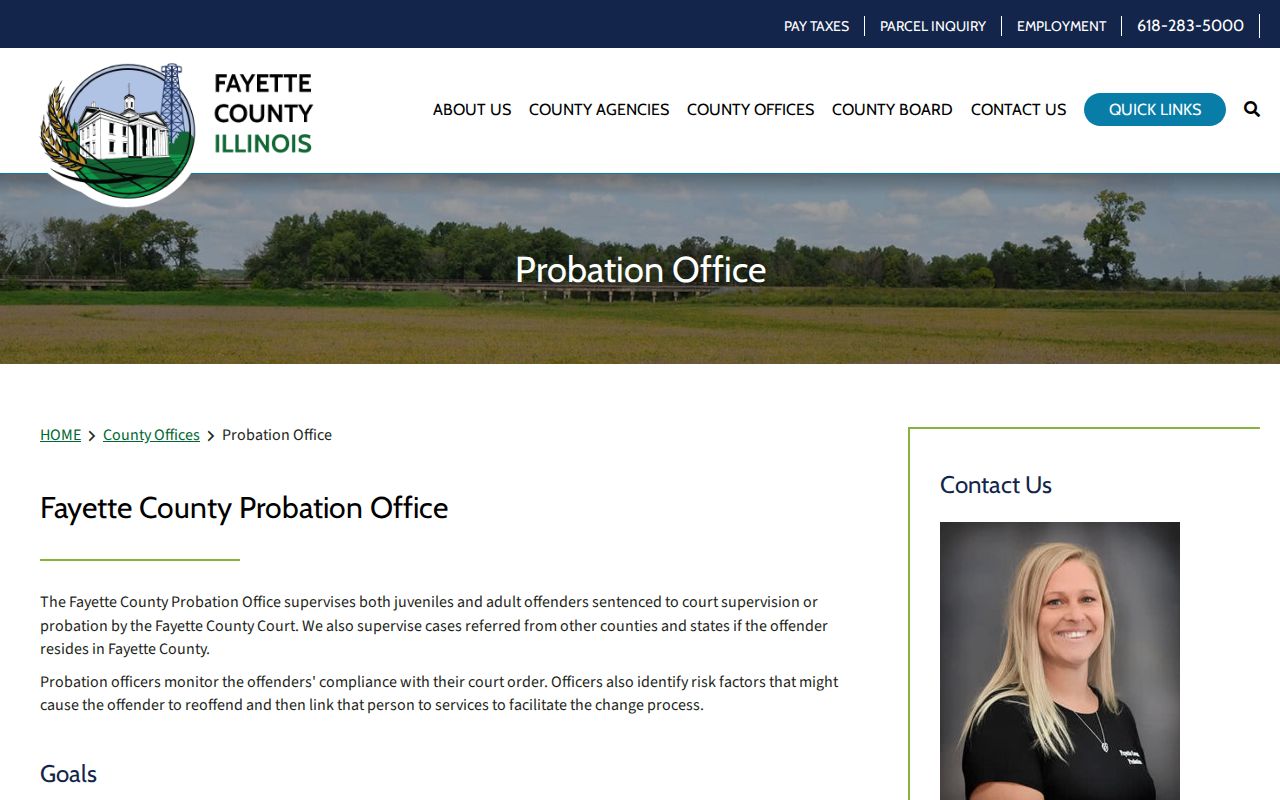
The page gives context to terse docket labels: Drug Court involves treatment, frequent review, random testing, rewards, and sanctions. GPS monitoring is published at $10 per day, while random drug testing is $20 to the defendant. Operational case notes are not an ordinary public lookup. Verify the public sentence in the court file and ask the office only for information it may lawfully release.
Sealed, Expunged, and Restricted Records
Juvenile, adoption, impounded, sealed, and expunged records do not appear like an ordinary adult public file. Expungement generally removes or destroys a qualifying event, while sealing restricts public view but preserves access for entities authorized by Illinois law. Eligibility depends on the exact arrest, charge, disposition, sentence, waiting period, and statutory exclusions. A dismissal may qualify for relief, but it does not erase itself merely because the prosecution ended.
The Illinois Courts approved form set is the correct starting point for a Fayette filing.
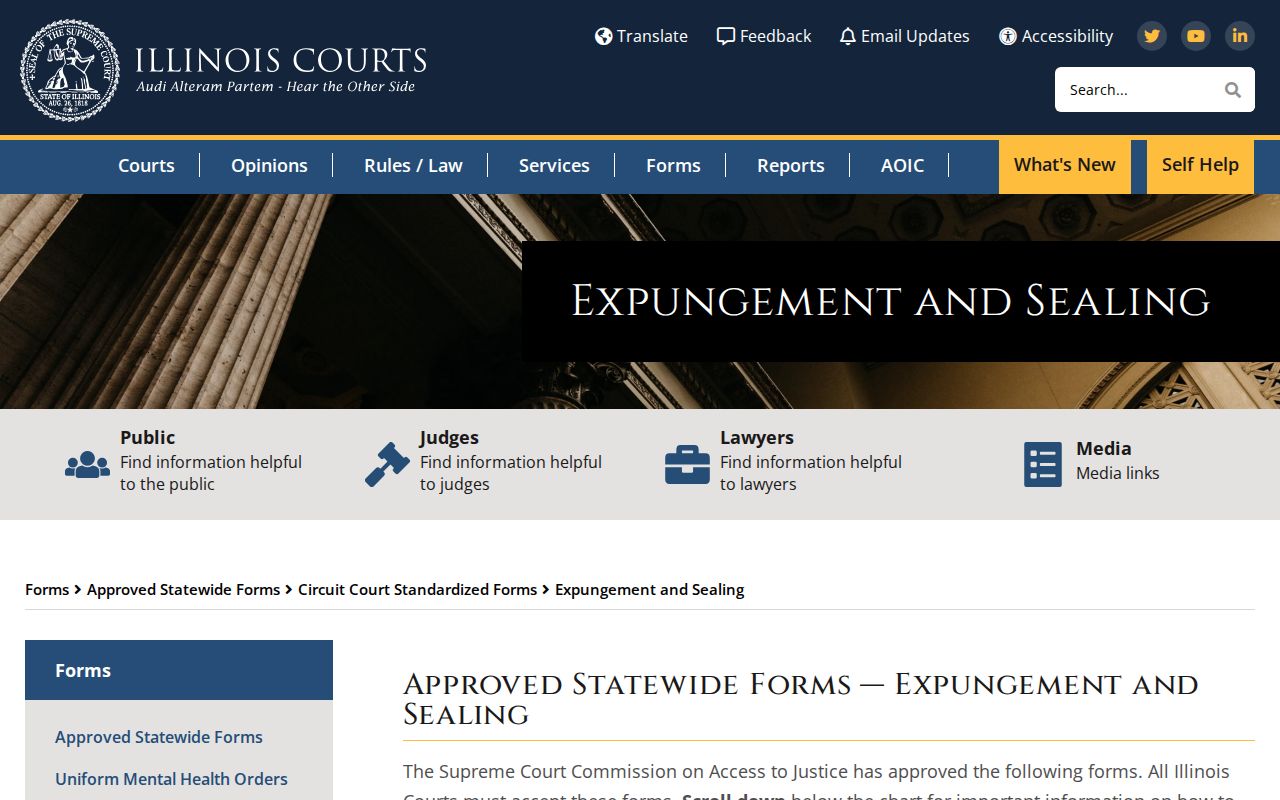
A petition filed with the Fayette Circuit Clerk must identify every event and arresting agency so required notices can issue to ISP, prosecutors, and law enforcement. The local filing fee was not located in the research; call 618-283-5009 and ask about both the fee and waiver forms. ISP charges $60 to process a court order to expunge or seal.
Following a Fayette County Clearing Order
A signed order starts agency processing rather than ending the practical work. Keep a certified copy, allow the clerk, arresting agency, and ISP time to update their systems, and then check the public Fayette case view. For your own state record, complete a no-charge Access and Review after the expected processing window. If the old arrest cycle remains, send ISP the Record Challenge form, point to the exact event, and attach the certified order and supporting court material.
The Office of the State Appellate Defender provides statewide clearing guidance that complements the court forms.
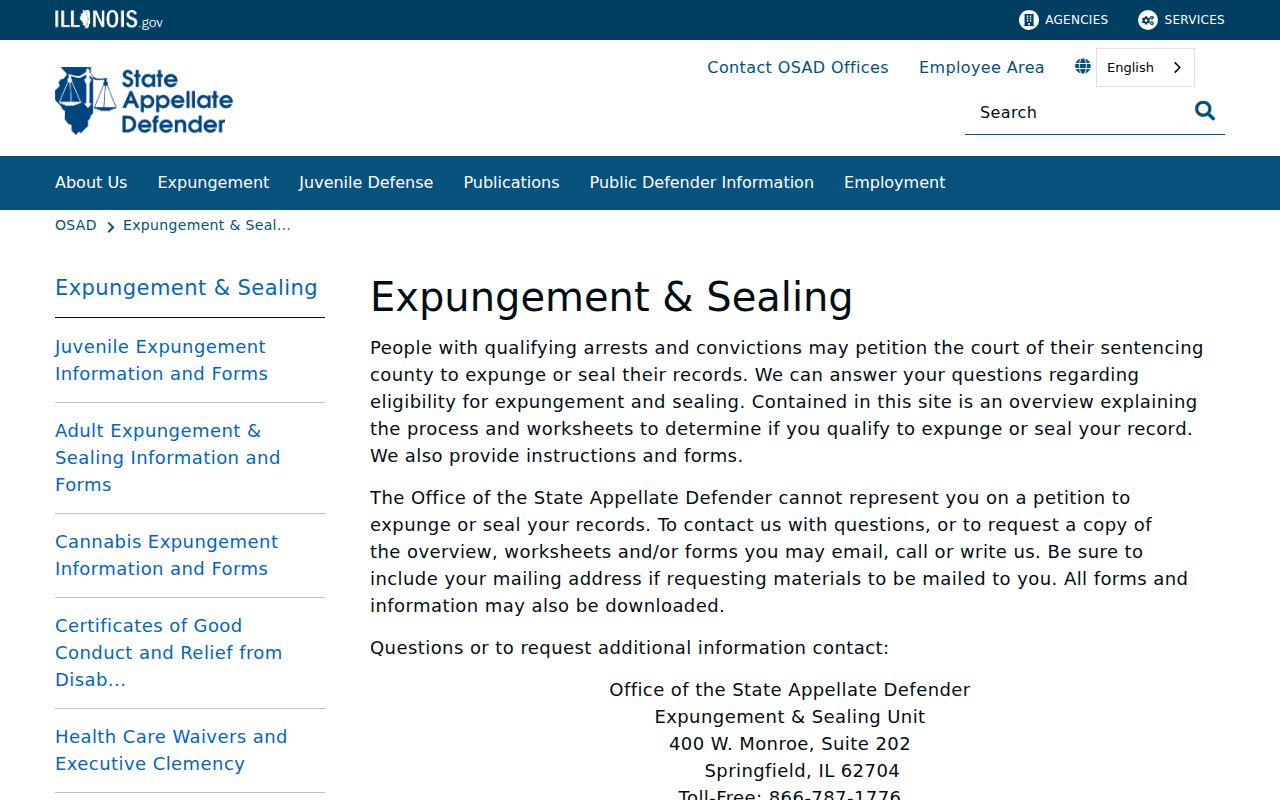
The guidance helps explain the distinction between relief that destroys qualifying records and sealing that limits public access. It does not replace an event-specific eligibility review under 20 ILCS 2630/5.2.
Fayette County Criminal Records by City
Municipal police reports remain with the department that created them, while prosecutions from Vandalia, St. Elmo, and Ramsey all route to Fayette Circuit Court rather than separate city court systems. Vandalia Police handles its own incident records. St. Elmo Police also covers Ramsey, so a Ramsey event should not be sent to a nonexistent village police records desk. County booking and court channels then take over after an arrest is lodged and a case is filed.
Vandalia Criminal Records
2020 population 7,458. Start a city report request with Vandalia Police, then use Fayette custody and court channels.
St. Elmo Criminal Records
2020 population 1,254. St. Elmo Police provides local service; filed cases belong to the Circuit Clerk.
Ramsey Criminal Records
2020 population 911. St. Elmo Police covers Ramsey; Village Hall handles village administrative records.
For each city, identify the arresting agency before making a report request. ISP troopers and other state or federal officers also can make arrests within the county, and their narratives stay with their own agencies.
Four Records Behind a Fayette County Arrest
A complete trace often needs four stops. The police or sheriff narrative tells what officers investigated. The Fayette jail file documents booking and present or past county custody. The Circuit Clerk file shows what prosecutors actually filed and what the court did with each count. The ISP transcript links fingerprint-supported cycles with reported outcomes, but the public CHIRP view is conviction-only.
- Arrest
- A restraint based on a warrant or asserted probable cause, not a finding of guilt.
- Charge
- An accusation that may differ between booking, prosecutor filing, and later amendments.
- Disposition
- The recorded result for a count, such as conviction, dismissal, acquittal, or supervision.
- Sentence
- The court-ordered consequence after a conviction, which may include custody, probation, financial terms, or other conditions.
Searchers should not treat the absence of one layer as proof that the other layers do not exist. A recent arrest may precede a filed case, a disposition may not yet link to ISP, and a sealed or expunged matter may be unavailable by design.